

Natural vs. artificial intelligence: will the human factor be replaced by AI?
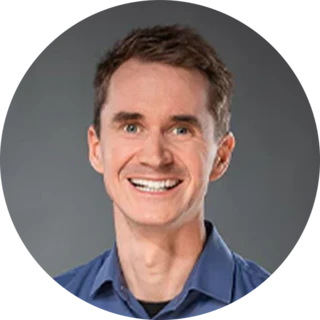 Dr. Henning Beck
 7 minutes reading time
Artificial intelligence has become part of our daily business routine. Cleverly applied, this high-performance technology supports us in complex data evaluation, process optimization and problem solving. But can AI replace humans in thinking and in successful customer relationship management? Will we soon be redundant?
In this interview with Dr. Henning Beck, neuroscientist and author, we discuss artificial intelligence and its limitations, how it differs from human thinking, and why AI will not replace the human factor in successful relationships.
What to expect in this article
Brain and AI in comparison – what are the respective modes of operation?
What are the strengths and weaknesses of AI and human thinking?
What does a brain-friendly working environment look like?
Why are the best-performing companies optimized for effectiveness?
How does AI affect relationship management and the customer experience?
Brain and AI in comparison – what are the respective modes of operation?
Humans think from the end. AI does the opposite. In our thinking, we do not go through the steps of input, processing and output chronologically, as AI does. No, we interact with the environment and design the output already in the processing process. Before we understand things, we already have a goal and a will to do something. A simple example is speech generation. Current chatbots like ChatGPT form a sentence by calculating, step by step, the most statistically plausible word to follow a given word. Humans, however, don't do that right now. Before we start speaking, we already have the idea and the end of the sentence in our mind's eye. Language is quasi the retrofit for a thought, which we have grasped long ago. The converse, that an intention arises just because information is processed in a statistically optimized way, is not scientifically provable, just a mere belief, a religion of technology. Therefore, the assumption that current AI technology will eventually act on its own is absurd.
In addition: humans understand how things work, why and what something is for, and what things can be used for. Example: We understand that the earth gets warm because the sun shines on it by mentally simulating being the sun warming the earth. We are constantly building such causal models of the world, and this allows us to see cause and effect. Statistical analysis is not enough to understand causes. After all, it does not become winter every year because the migratory birds fly south.
AI, on the other hand, is ultimately always an optimization process: It adapts to a data set, finds efficient ways to produce an output. That's exactly how intelligence is defined: Solving problems, of whatever kind, more and more efficiently, faster, and using less energy. AI does that very well. Humans, on the other hand, are not interested in adapting to data sets. We question things, break rules and make mistakes - and that's a good thing. After all, human thinking is far more than intelligent: It is the source of our creativity, empathy, curiosity and innovations.
What are the strengths and weaknesses of AI and human thinking?
The great weakness of human thinking is that we personalize everything in our environment and test it for usefulness. We lack objective access to the world because we distort and falsify through our glasses. It doesn't matter how objective the data is. We are always concerned with personal advantage.
However, when the task is to evaluate and optimize a lot of data in an objective, error-free way, Artificial Intelligence is vastly superior to us. But in areas where there are no measurable numbers, we are far ahead of Artificial Intelligence. These include non-quantifiable things such as ideas, knowledge, happiness, confidence, hope, security and freedom. Interestingly, we are currently living in an age of compulsory numerical quantification, in which even the last remnant of human life is to be made measurable and thus monetizable.
From going to the toilet to digital business models - everything is valued. Likes, clicks, shares: we try to convert human behavior into key figures and sizes in order to evaluate them for our success, optimize them and earn money with them. But the really important things in our lives have never ended up on the Internet, not written down or spoken out. It's a world without data that AI has never seen. A world closed to digitalization. In the end, AI's strength is analyzing and processing measurable numbers. Its weakness is clearly that it is useless without data. Human thinking, on the other hand, is not capable of processing vast amounts of data without error, but is always in demand when there are no objective key figures to measure: in the case of ideas, innovations, trust or satisfaction.
We associate negatives with mistakes, but why are they useful?
People learn fastest when they are allowed to make mistakes and recognize them themselves. It is important to question when I can make a mistake and what I learn from it. If I want to avoid every mistake at the beginning and optimize rules, then I don't understand the world. Only when we break rules, cross boundaries and enter new territory can we be creative, innovate and drive progress. A perfect world is boring and the end of all progress. After all, if everything is perfect, where will you go from there? Having the freedom to make mistakes ensures adaptability in the face of new challenges.
What does a brain-friendly working environment look like?
The human brain is not a computer that I carry around with me and switch on and off as needed. Depending on the environment, we think differently. In addition to the freedom to make mistakes, a triad of concentration, exchange opportunities and rest phases is relevant for a brain-friendly working environment. People need a motivating workplace where they can work in a focused and undisturbed manner, then exchange ideas with others in the company and finally recharge their energy reserves. Motivation arises when we see the end result of our work. Because the greatest confirmation for us humans is the appreciation of our work and the positive outcome of our actions.